Skip to content


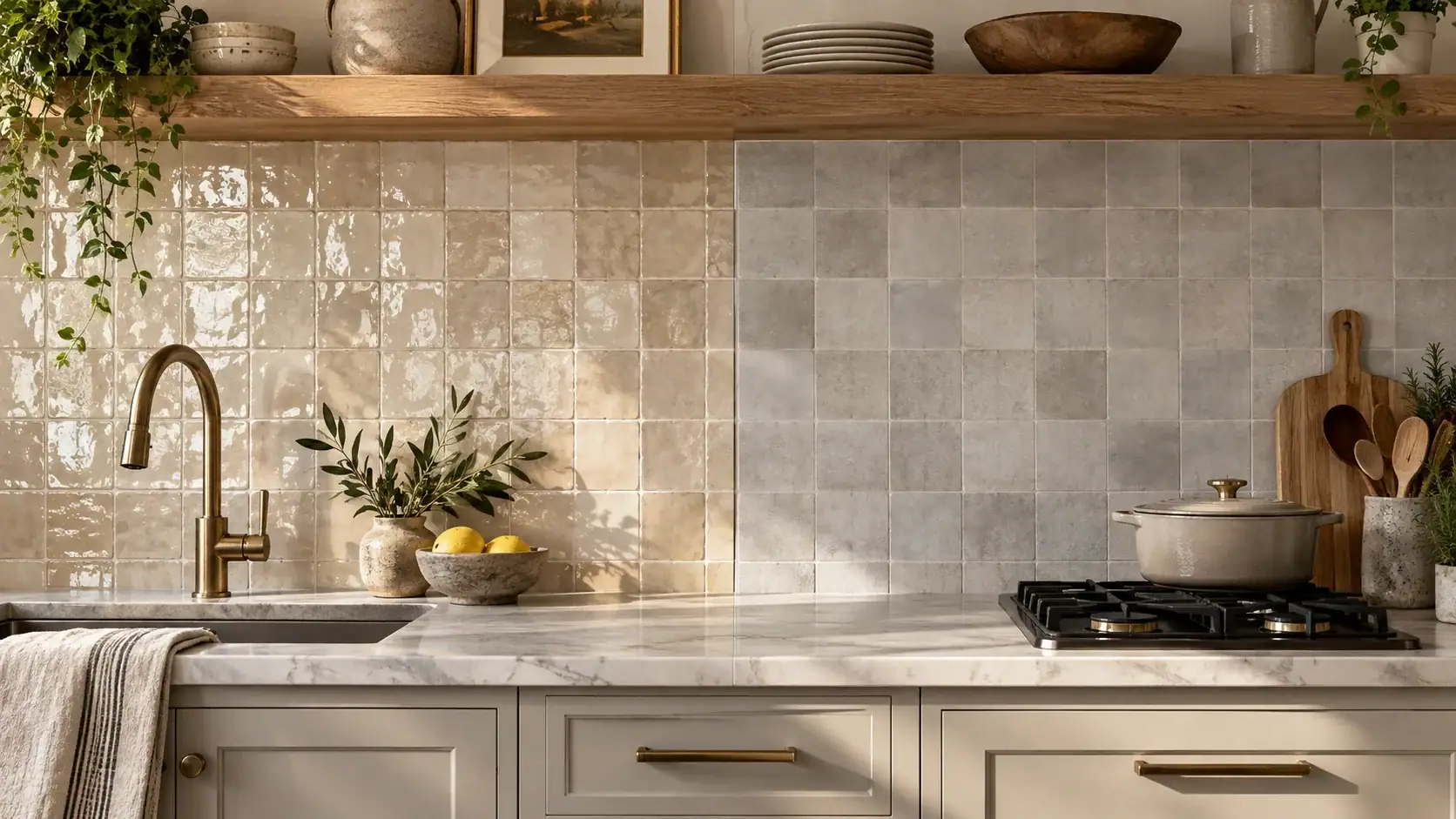
If your inspiration folder is filled with glossy kitchen backsplashes, softly uneven surfaces, imperfect edges, and tiles that seem to change color every time the light hits them, chances are you have come across zellige tile.
Authentic Moroccan zellige has become a favorite among homeowners and designers who want something warmer and less uniform than traditional subway tile. Boutique tile companies such as Zia Tile and Riad Tile have helped bring the look into modern American homes, while handmade manufacturers such as Fireclay Tile have made visible color and glaze variation a major part of the broader artisan-tile aesthetic.
There is a reason people love it. Genuine handmade tile has depth and character that perfectly uniform tile cannot completely duplicate.
But there is another side to the look.
Handmade clay tile can be more expensive, more complicated to install, and more particular about cleaning and maintenance. If what you really love is the look of zellige rather than the requirement that every tile be handmade, modern textured porcelain and ceramic wall tiles can offer a convincing alternative.
Here is how the two compare—and how to get that relaxed, handmade look without turning your backsplash into a high-maintenance design project.
What Is Zellige Tile? And Why Is It Everywhere Right Now?
Zellige is a traditional Moroccan tile made from clay and shaped, glazed, and fired using processes that intentionally leave variation from one piece to another.
Instead of trying to make every tile identical, authentic zellige celebrates the differences.
You may notice:
- Slight differences in size and shape
- Irregular or chiseled-looking edges
- Wavy or uneven surfaces
- Color variation from tile to tile
- Differences in glaze thickness
- Small pits, crazing, or other surface irregularities
- Areas that reflect light differently across the same wall
Those variations are not necessarily defects. They are a large part of the appeal.
On a kitchen backsplash, for example, a simple white or cream zellige can look surprisingly dimensional. One tile might appear almost white while the tile beside it looks warmer or slightly darker. As sunlight moves across the room, the uneven surfaces reflect it at different angles and create even more variation.
That is why a wall made from one seemingly simple color can still feel layered and interesting.
Brands such as Zia Tile and Riad Tile have made authentic zellige especially visible online, while Fireclay Tile is well known for handmade ceramic tile where differences in color, glaze, sheen, size, and texture are part of the finished character.
The common thread is the same: imperfection is part of the design.
Why Does Handmade Tile Look So Different From Standard Tile?
Most mass-produced tile is designed around consistency. Manufacturers work to make pieces predictable in size, thickness, color, and finish so installers can create straight joints and a relatively uniform finished surface.
Handmade tile turns some of that thinking upside down.
The clay body may vary slightly. Glaze can pool more heavily in one area than another. An edge may not be perfectly straight. The face of the tile may bow or undulate slightly.
When hundreds of those small differences are installed together, they produce the visual movement people associate with handmade tile.
It is especially noticeable with glossy finishes because reflected light exaggerates subtle surface differences. If you are deciding between a shiny, light-reflective wall and a softer finish, our guide to glossy vs. matte finish porcelain tiles explains how each finish changes the way a room looks and feels.
The Hidden Downsides of Authentic Handmade Clay Tile
There is nothing inherently wrong with choosing authentic zellige. If you love the history, craftsmanship, and genuine variation, the extra effort may be completely worthwhile.
But it is worth knowing what comes with that choice before ordering a few boxes based on an inspiration photo.
1. Handmade Tile Can Carry a Premium Price
Authentic artisan tile requires considerably more hands-on production than a conventional factory-made tile. That usually shows up in the price.
The tile itself is only part of the project cost, too.
You may also need to budget for:
- Additional overage because of variation and cuts
- Freight or specialty shipping
- Specialized installation materials
- A tile setter familiar with handmade products
- Sealers or maintenance products when required
For a small backsplash, the premium may be manageable. Across a large kitchen, shower, or full wall, however, the difference can become substantial.
If your main goal is achieving a similar visual effect rather than owning traditionally made zellige specifically, that is where porcelain and other handmade-look wall tiles become interesting.
2. Irregular Tiles Require More Installation Skill
The same irregularities that make handmade tile beautiful can make it more demanding to install.
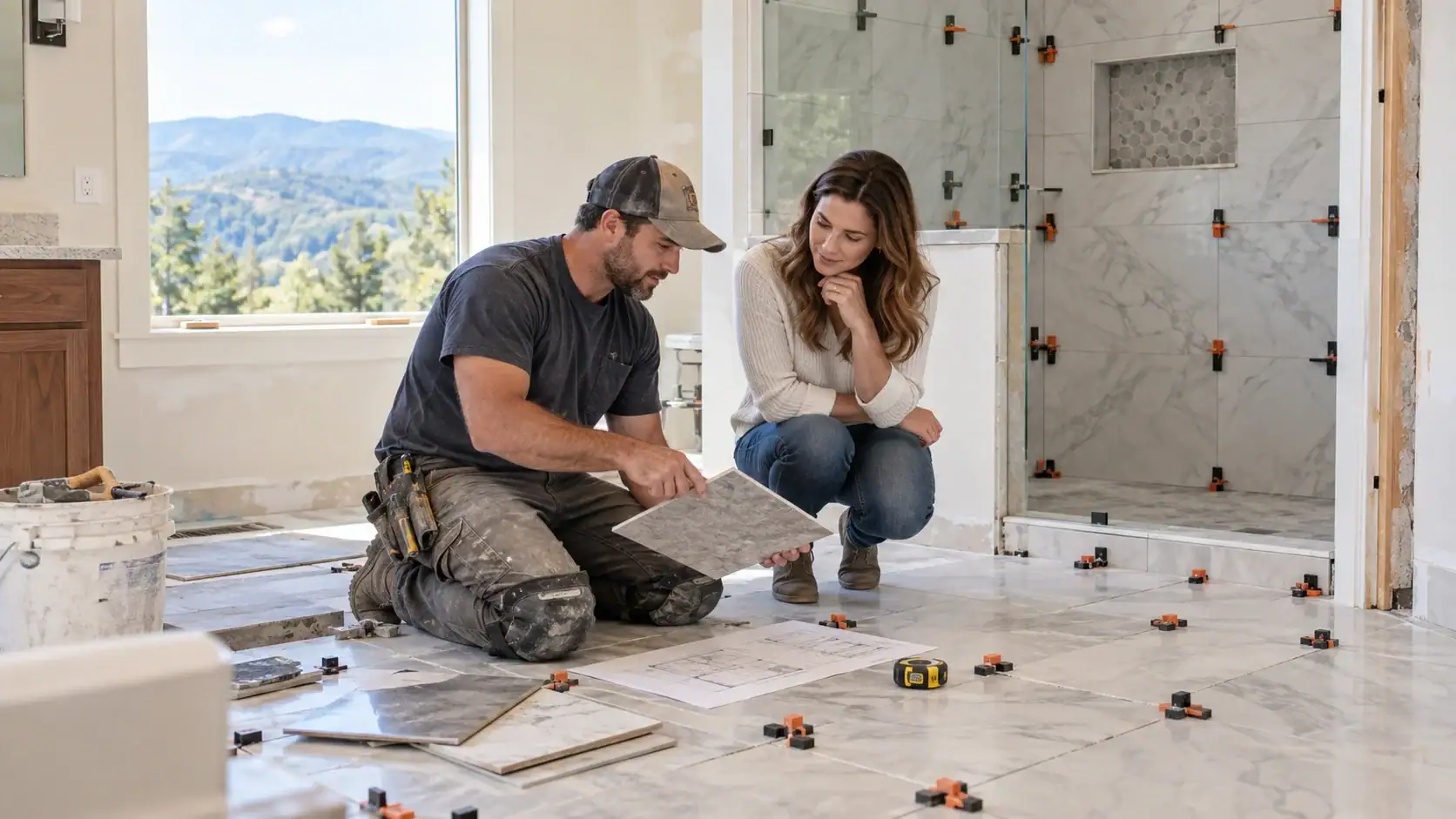
With very consistent tile, spacers help establish predictable grout lines. Handmade tile may have enough variation in its edges, thickness, or surface that the installer has to adjust individual pieces visually as the wall develops.
Trying to force an intentionally irregular tile into perfectly mechanical grout lines can actually work against the look.
There is also lippage to consider—the difference in elevation between the edges of neighboring tiles.
The Tile Council of North America explains that tile lippage is affected by several factors, including actual tile warpage, grout-joint spacing, lighting, reflective surfaces, and the flatness of the substrate.
That last point matters. A wavy handmade surface already catches light differently. Add an uneven wall behind it, and unwanted lippage can become much more obvious.
This is one reason experienced installers often recommend dry-laying or sorting highly varied tile before installation rather than opening one box at a time and setting pieces in order.
3. Tight Grout Joints Can Be More Complicated Than They Look
One of the most common inspiration photos for zellige shows tile installed with extremely narrow grout joints.
The effect can be beautiful, but there is a difference between a grout joint that looks minimal and one that ignores the actual variation in the tile.
When tile dimensions vary, the installer needs enough flexibility in the joints to keep the installation visually balanced. A joint that is too tight can make size differences and uneven edges more obvious instead of less obvious.
Always follow the tile manufacturer’s installation recommendations rather than choosing grout spacing from a social media photo.
4. Cleaning Can Require More Attention
A perfectly flat glazed backsplash is easy to wipe because a cloth passes smoothly over the surface.
With heavily textured or irregular tile, there are more tiny transitions, edges, pits, and low spots where kitchen grease, cooking residue, soap, or mineral deposits can collect.
This does not mean zellige is impossible to clean. It means surface texture matters when choosing a material for a hardworking area.
For example, Zia Tile recommends pH-neutral cleaning products for its zellige and cautions against acidic cleaners that can affect the surface. Some installations also call for sealing depending on the product and application.
That is more to think about than wiping down a smooth, low-porosity porcelain surface with an appropriate everyday cleaner.
5. Some Handmade Products Require Sealing or Special Care
Do not assume every glazed handmade tile has identical maintenance requirements.
The clay body, glaze, crazing, installation area, and manufacturer can all affect care instructions.
Some products require sealing before or after grouting. Some need additional protection in wet areas. Crackle or crazed glazes may have their own requirements.
Always follow the manufacturer’s instructions for the exact tile you purchase.
The Smart Alternative: High-Variation Textured Porcelain
Modern tile manufacturing has become extremely good at reproducing visual characteristics that once required a natural or handmade material.
We already see this with porcelain that recreates marble veining, wood grain, slate, concrete, and natural stone. The same principle can be applied to the handmade aesthetic.
Instead of making every piece look identical, manufacturers can intentionally introduce:
- Multiple color faces within one collection
- Subtle tonal variation
- Gloss variation
- Uneven-looking surfaces
- Softly irregular edges
- Color pooling around the perimeter
- Small-format subway proportions
Installed together, those details break up the uniformity that can make conventional subway tile feel flat.
If you are exploring this route, start with Tile Factory Direct’s porcelain tile collection and wall tile selection. Look beyond the color name and pay attention to the finish, edge, surface texture, and amount of shade variation shown across multiple pieces.
Zellige vs. Porcelain: What’s the Practical Difference?
| Feature | Authentic Zellige | Handmade-Look Porcelain |
|---|---|---|
| Appearance | Naturally irregular with unique variation from piece to piece | Manufactured variation designed to recreate an artisan look |
| Edges | May be noticeably irregular | Usually more controlled and predictable |
| Surface | May include pits, waviness, crazing, and glaze variation | Can offer texture and variation with greater consistency |
| Installation | Often benefits from an installer experienced with handmade tile | More predictable sizing can make layout easier |
| Maintenance | Depends heavily on clay body, glaze, and installation | Typically straightforward for glazed porcelain |
| Sealing | May be required depending on product and application | Most glazed porcelain tile itself does not require routine sealing; follow manufacturer instructions |
| Consistency | Variation is part of the product | Variation is designed within more controlled dimensions |
| Budget | Often positioned as a premium specialty material | Available across a broader range of price points |
Porcelain Is Easier to Live With—But It Is Not Maintenance-Free Magic
One reason porcelain is so popular in kitchens and bathrooms is its dense, low-absorption body.
That makes it resistant to moisture and stains and generally easier to maintain than more porous materials. Browse our guide to choosing porcelain tile if you want a deeper look at finishes, applications, durability, and other selection factors.
However, there are two important distinctions.
First, porcelain tile and grout are not the same thing. Even if the tile itself does not require sealing, your grout may have its own care requirements depending on the product selected.
Second, porcelain is dense and hard. That is excellent after installation, but it can make cutting more challenging for a DIYer. A handmade-look porcelain backsplash may be more predictable to lay out than true zellige, but you still need the correct tools and surface preparation.
Our porcelain tile installation guide covers the basic installation process if you are deciding whether the project is something you want to tackle yourself.
Look for Controlled Imperfection, Not Fake Damage
A good zellige-inspired tile should not simply look beat up.
What makes handmade tile appealing is the controlled combination of variation.
Look for a tile where several elements work together:
- A surface that is not perfectly flat
- Several coordinating shades instead of one repeated color
- A glossy or softly reflective glaze
- Slight visual variation along the edges
- A small format that lets variation repeat across the wall
For example, Tile Factory Direct’s Rustica White Rustic Wall Tile uses a small-format glossy surface and irregular edge to create a less mechanical appearance than a perfectly straight conventional subway tile.
The Rustica collection is ceramic rather than authentic Moroccan zellige, but it demonstrates an important design principle: you can introduce character through edge, sheen, scale, and surface variation without relying on traditional handmade zellige for the entire project.
Design Tips: How to Make Varied Tile Look More Handmade
The tile itself is only half of the equation. Grout color, layout, lighting, and how you distribute variation can completely change the finished wall.
1. Mix Tiles Before You Install Them
If your tile collection includes noticeable shade variation, do not finish one carton before opening the next.
Open several boxes and mix pieces throughout the installation.
This prevents one area of the wall from looking darker, lighter, or more uniform than another and creates the naturally random appearance associated with handmade tile.
Dry-laying a portion of the tile first can also help you identify pieces you want to distribute rather than cluster.
2. Use Matching Grout for a Softer Look
If your goal is to make color and surface variation the star, choose grout close to the main tile color.
For example:
- Warm white tile with warm white or ivory grout
- Pale green tile with a soft gray-green or warm gray grout
- Blue tile with a muted blue-gray grout
Matching grout allows the eye to move across the whole surface rather than stopping at every individual tile.
It also makes irregular edges feel subtler.
3. Use Contrasting Grout When You Want to Emphasize the Shape
Contrast does the opposite.
A darker grout around light tile outlines every piece and makes the layout much more visible. That can work beautifully, but it shifts attention away from glaze variation and toward geometry.
If your tile already has dramatic color and texture variation, strong grout contrast can sometimes create too much visual activity.
For more guidance on grout and kitchen or bathroom tile combinations, see our guide to choosing tile for kitchens and bathrooms.
4. Try a Straight Stack for a Modern Handmade Look
A straight stacked layout pairs particularly well with imperfect-looking tile.
The grid is modern and orderly, while the color and surface variations prevent it from feeling sterile.
That contrast—precise layout, imperfect-looking surface—is one of the easiest ways to bring zellige-inspired tile into a contemporary kitchen or bathroom.
5. Use a Running Bond for Something More Traditional
A classic running-bond or brick pattern feels familiar and relaxed.
It works especially well with elongated subway formats and can help a handmade-look tile feel timeless rather than tied to one particular design trend.
If you already have busy countertops, dramatic cabinet hardware, or patterned flooring, a simple running bond can also keep the backsplash from competing with everything around it.
6. Let Light Do Some of the Work
A glossy, lightly textured tile really comes alive near natural light, under-cabinet lighting, sconces, or pendant lights.
Because each portion of the surface sits at a slightly different angle, highlights move across the installation instead of reflecting as one perfectly flat plane.
This is one of the defining characteristics people notice in zellige inspiration photos, and it is why the finish can be just as important as the color.
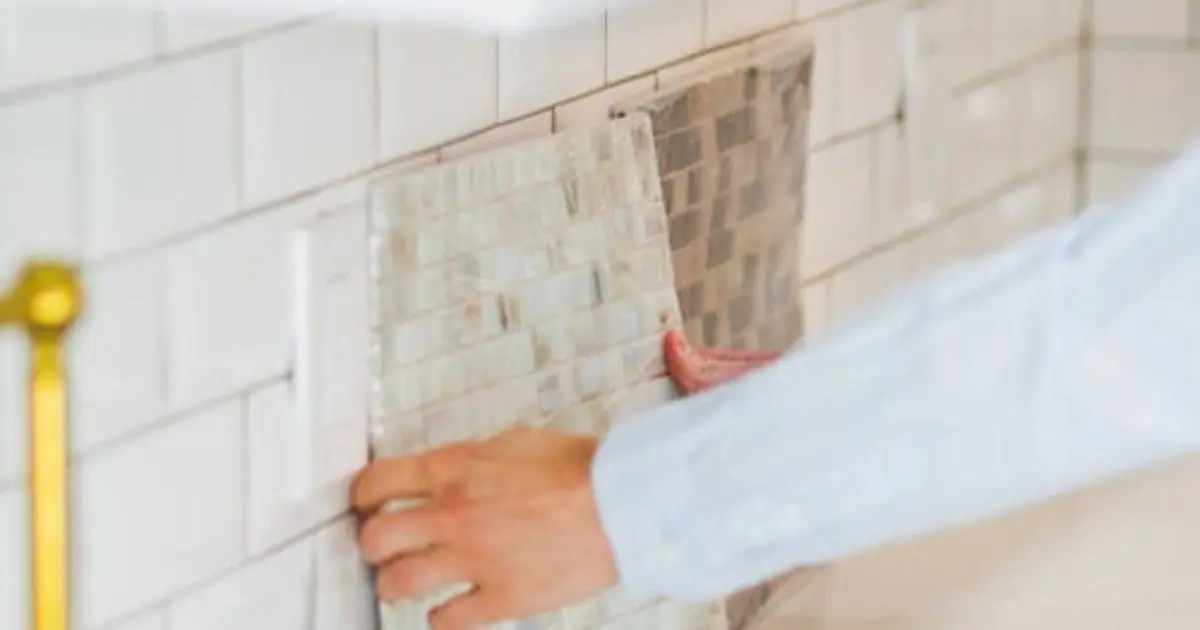
Before making your final choice, view samples vertically in the actual room where they will be installed. A tile lying flat under showroom lighting can look surprisingly different once placed on a wall beside a window.
Where Does the Zellige Look Work Best?
You do not need to cover an entire room to make this style work.
In fact, its texture and variation often have more impact when concentrated in a specific area.
Some of our favorite applications include:
- Kitchen backsplashes
- Bathroom vanity walls
- Shower walls when the tile is rated for the application
- Fireplace surrounds when approved by the manufacturer
- Wet bars and coffee bars
- Built-in shelving backs
- Laundry room backsplashes
- Small statement walls
A textured wall tile can also be a useful counterpoint to large-format floor tile. The floor remains visually quiet and easy to maintain while the smaller wall tile provides the character.
When Should You Choose Authentic Zellige?
Choose authentic zellige when the craftsmanship itself matters to you.
If you love knowing that differences between individual pieces came from shaping, glazing, and firing rather than a manufactured variation pattern, there really is no exact substitute.
Authentic zellige may be worth the premium when:
- The tile is the centerpiece of the entire design
- You appreciate visible imperfections rather than trying to hide them
- You are comfortable following the manufacturer’s care requirements
- Your installer has experience working with handmade tile
- Your budget has room for the material, overage, and installation
In that situation, the quirks are not downsides. They are part of what you are paying for.
When Does a Porcelain or Ceramic Alternative Make More Sense?
A manufactured alternative may be the better fit when you want the visual warmth of handmade tile without making the material itself the focus of the project.
Consider porcelain or a handmade-look ceramic wall tile when:
- You want a more predictable project budget
- You prefer more consistent sizing
- You want straightforward everyday maintenance
- You are planning a larger installation
- You want more control over the amount of variation
- You like the zellige aesthetic but do not specifically need authentic Moroccan tile
There is no design rule saying a beautiful kitchen has to use the most expensive version of every material.
Sometimes the smarter choice is identifying exactly what you love about an inspiration photo—color variation, sheen, irregular edges, small format, or texture—and finding a tile that gives you those qualities in a form better suited to your home and budget.
The Bottom Line: Buy the Look You Actually Want
Zellige’s popularity makes sense. Its imperfect edges, rich glaze variation, and light-catching surface give walls a depth that flat, uniform tile often lacks.
But the lesson homeowners should take from the trend is not necessarily that every backsplash needs authentic handmade Moroccan tile.
The bigger design lesson is that variation creates character.
Modern porcelain and ceramic collections can use multiple shades, irregular-looking edges, varied surfaces, and reflective finishes to capture much of that relaxed artisan feeling while offering more predictable dimensions and simpler everyday care.
If authenticity and craftsmanship are the priority, choose real zellige and embrace its irregularities.
If you mainly want a beautiful, dimensional backsplash that feels handmade without the boutique price or added upkeep, start by exploring porcelain tile and wall tile options at Tile Factory Direct.
The best choice is not the one with the trendiest name. It is the tile that gives your room the look you love and still makes sense for the way you actually live.